

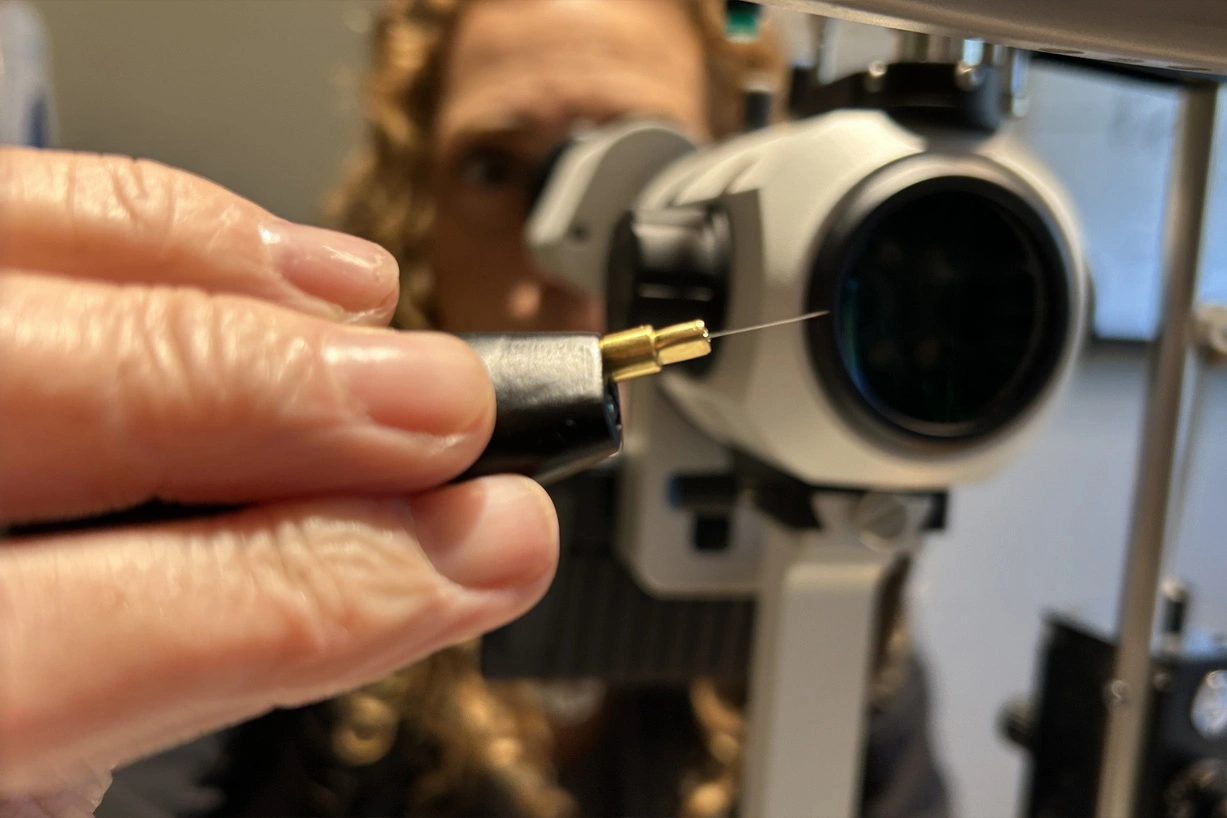
The NuVissa plasma pen is a precision, non-incisional technology used to treat select ocular surface and eyelid conditions — most notably conjunctivochalasis (CCH).
At Dry Eye Equation, we primarily use the NuVissa plasma pen to address redundant, loose conjunctival tissue that interferes with tear flow, comfort, and ocular surface stability.
Conjunctivochalasis is a condition in which the conjunctiva (the thin, clear tissue covering the white of the eye) becomes loose, redundant, or folded, particularly along the lower eyelid margin.
These folds can:
CCH is commonly underdiagnosed and often mistaken for routine dry eye — especially when symptoms persist despite appropriate treatment.
Patients with CCH may experience:
If dry eye treatments help some but not enough, CCH may be part of the problem.
The NuVissa plasma pen uses controlled plasma energy to precisely contract and resurface targeted tissue without cutting or sutures.
When applied to redundant conjunctival tissue:
This approach allows us to address the mechanical cause of symptoms — not just treat surface dryness.
Compared to traditional surgical approaches, plasma therapy:
For appropriately selected patients, it can provide meaningful symptom improvement without formal surgery.
Post-treatment care is customized and may include lubricants or anti-inflammatory support.
While conjunctivochalasis is our primary indication, plasma technology may also be used selectively for:
Candidacy depends on anatomy, diagnosis, and overall ocular surface health.
NuVissa plasma therapy may be considered if:
A comprehensive Dry Eye Evaluation is essential to determine whether conjunctivochalasis — or another structural issue — is contributing to your symptoms.
Dry eye is often multifactorial. For some patients, no amount of drops, heat, or inflammation control will fully resolve symptoms if mechanical issues like conjunctivochalasis are left untreated.
Plasma therapy allows us to address this missing piece — thoughtfully, precisely, and conservatively.
The area is thoroughly numbed with topical anesthetic before treatment. Most patients feel pressure or mild awareness, not pain. Some irritation or soreness afterward is normal and temporary.
No. Plasma therapy is non-incisional — there are no cuts, stitches, or sutures. It is performed in-office and targets tissue precisely without traditional surgical techniques.
Downtime is typically minimal. Mild redness, swelling, or irritation is expected initially and gradually improves as the tissue heals. Most patients resume normal activities quickly, with some temporary activity restrictions.
Drops and devices help manage inflammation, tear quality, and gland function.
Plasma therapy addresses a mechanical problem — excess or loose conjunctival tissue that interferes with tear flow and comfort. When conjunctivochalasis is present, treating the tissue itself may be necessary for lasting relief.
Conjunctivochalasis is diagnosed during a detailed eye exam. It is often suspected when:
Yes, when performed by an experienced eye care specialist using appropriate techniques. The plasma energy is precisely controlled and localized, and the surrounding ocular structures are protected throughout treatment.
Plasma therapy can provide long-lasting improvement, but conjunctivochalasis can be influenced by age, tissue quality, and ocular surface inflammation. Some patients may need additional treatments over time.
Yes, when indicated. Treatment is customized based on the severity and location of conjunctival redundancy in each eye.
As with any ocular procedure, risks exist but are uncommon. These may include temporary irritation, redness, inflammation, or delayed healing. All risks and expectations are reviewed in detail before proceeding.
No. While plasma pens are sometimes marketed cosmetically, our use of the NuVissa plasma pen is medical and functional, focused on improving ocular surface health and comfort.
Yes. Plasma therapy is often part of a comprehensive dry eye plan and may be combined with IPL, LLLT, Tixel, gland expression, or prescription therapies to optimize outcomes.
The procedure itself is relatively brief, typically completed within a single office visit after adequate numbing time.
A Dry Eye Evaluation is essential to determine whether conjunctivochalasis or another structural issue is contributing to your symptoms — and whether plasma therapy is appropriate.


710 Military Cutoff Rd Suite 130, Wilmington, NC 28405
(910) 447-2020 | info@dryeyeequaton.com
Follow us on:
Crafted with Love: DigiCorns